Care & nursing homes
Extra eyes on quiet rooms overnight
Night shifts are a staffing arithmetic problem. There are more rooms than carers, the rooms that need attention are not the same ones every night, and the only way to know which is which has traditionally been to walk the corridor and look.
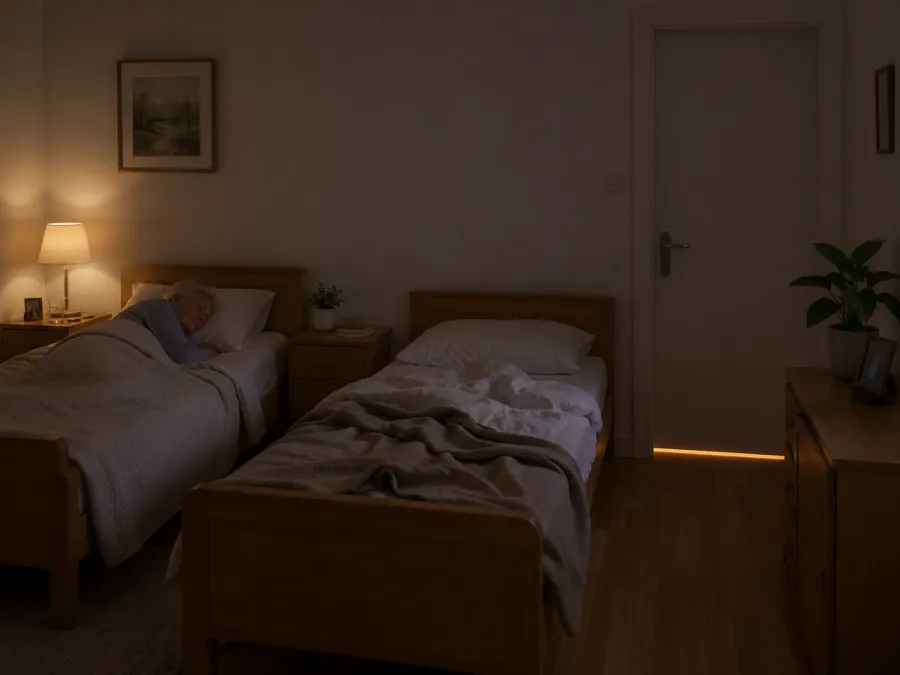
Spåna is a way to make that round smarter rather than more frequent. Each resident's motion and door sensors get grouped into a room, and rules run against them continuously. When something crosses a threshold you set, it becomes an alert tagged with the room – so the question stops being "is anyone up?" and becomes "room 12 is up, who is nearest?".
The night-time picture is where it earns its place. Movement during quiet hours is the single most useful signal in a care setting: it separates a resident who is asleep from one who is up, without anyone opening a door and risking waking them. A resident making repeated trips to the bathroom shows up as a pattern rather than as something the morning shift pieces together after the fact.
Continuous movement in a single room for longer than expected is the other half. Someone who has been moving in one room for an unusually long stretch may be disoriented, may be looking for something, or may simply be having a bad night – but in every case, it is the kind of thing you would want a carer to know about before it becomes an incident report.
This is deliberately not a camera system, and that is the point in a care setting. Residents' rooms are their homes, and the regulatory and dignity questions around cameras are ones most operators would rather not open. Motion and door sensors carry none of that weight: they record that a room was moved through, not who did what. Staff get a feed that is actionable and residents keep a private room.
It is also worth being clear about what this is not. Spåna does not replace a nurse call system, does not detect falls, and is not a clinical device. It is a layer of ambient awareness sitting alongside the systems you already run, aimed squarely at the hours when you have the fewest people on the floor.
Alerts worth setting up
Each of these is a rule you configure once in Spåna against a room. Tune the durations and thresholds until the alerts you get are ones you act on.
- Movement during quiet hours
- Set the quiet-hours window to your night shift. Motion in a resident's room during that window raises an alert tagged with the room, so staff can decide whether to look in rather than checking every door.
- Continuous movement
- Fires when occupancy stays detected in one room for longer than a duration you choose – fifteen minutes is a reasonable starting point overnight. Useful for spotting a resident who is up and unsettled.
- No movement
- The inverse, for daytime use: a resident's room with no motion for an unusually long stretch when they would normally be active. Set the duration to fit the individual rather than the building.
- Door or window left open
- On a room or corridor door, catches doors propped or left open past a duration you set – useful for fire-door discipline and for rooms that should stay closed overnight.
What this setup needs
Spåna watches sensors that are already paired to your DIRIGERA hub, so most of this is placement rather than shopping.
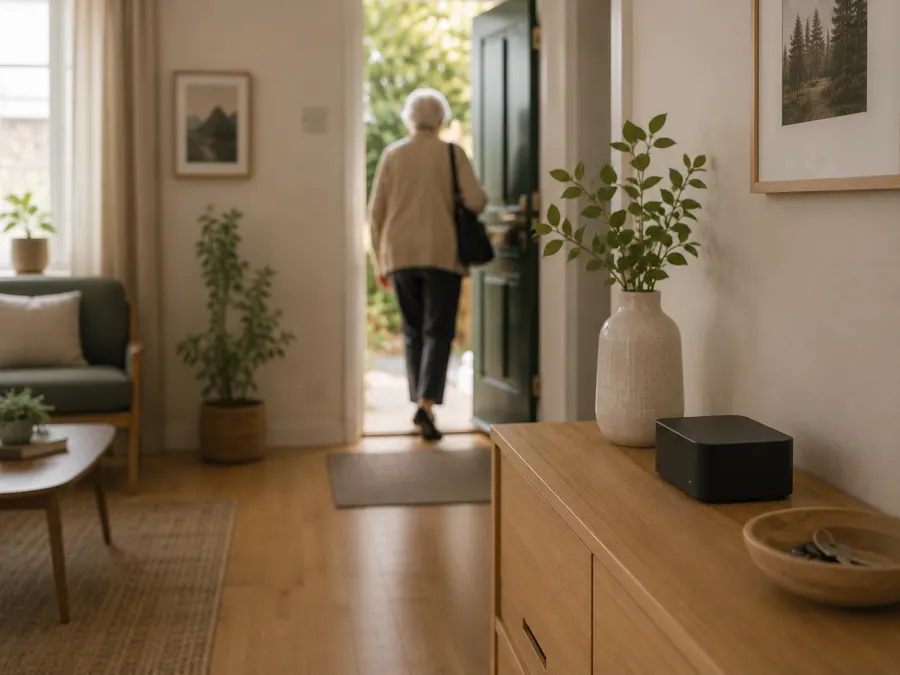
- One motion sensor per resident room you want covered. Placement matters more than count – aim it at the route between bed and door rather than at the bed itself.
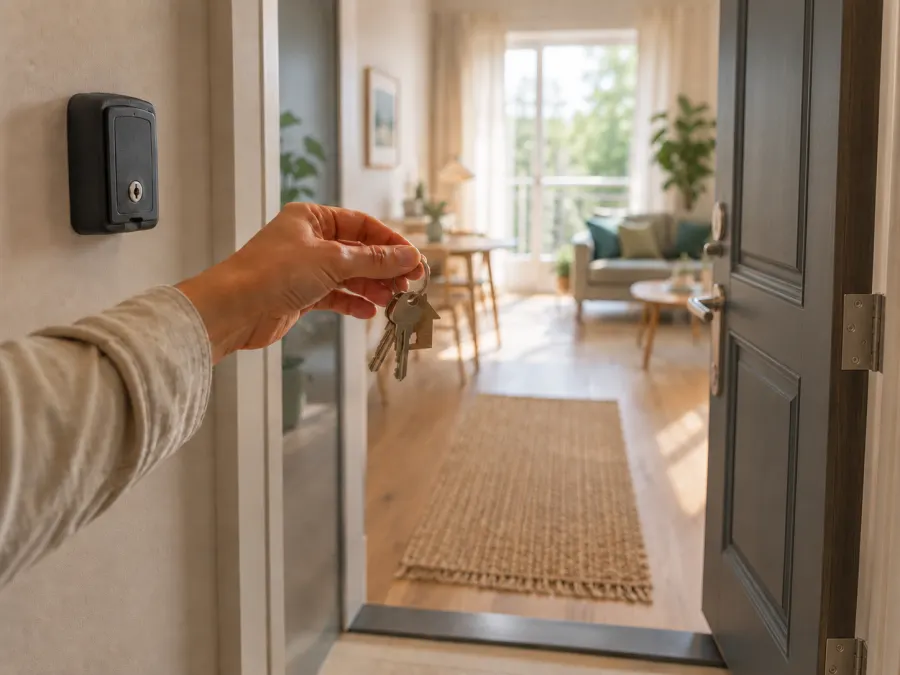
- Open/close sensors on the doors that matter: room doors where relevant, plus any corridor or exit door you want to keep an eye on.
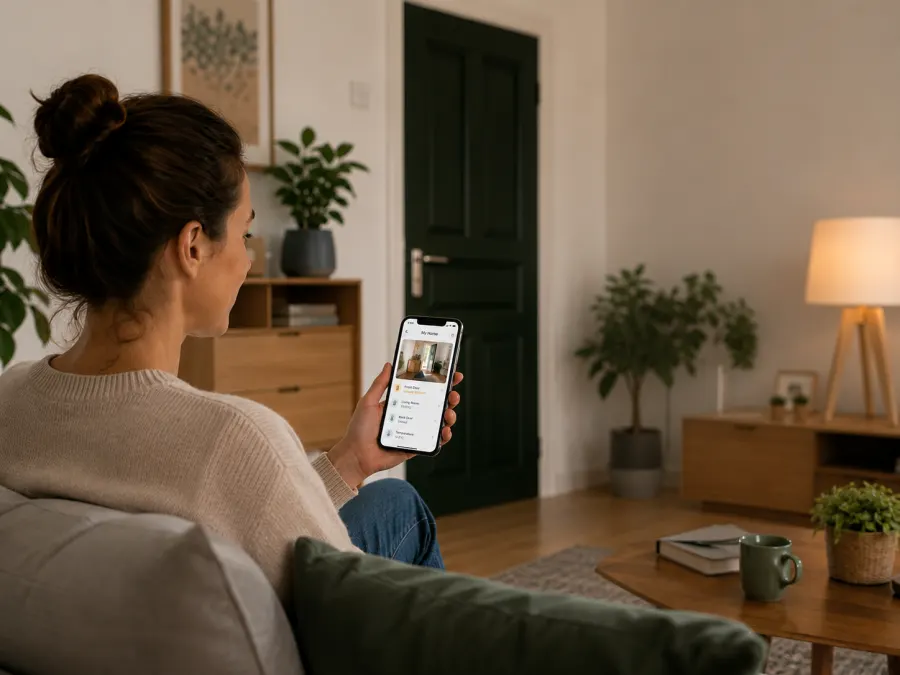
- Rooms configured in Spåna so each sensor is grouped under the room it belongs to. This is what makes the alert feed readable at 3am – alerts arrive labelled by room, not by sensor ID.
- A DIRIGERA hub covering the sensors, and an always-on device on the same network running the Spåna agent. Larger buildings may need more than one hub for radio coverage.
Questions
- Does Spåna work for a care or nursing home?
- It does. Group each resident's sensors into a room, set your quiet hours, and Spåna flags movement during the night or continuous movement for longer than expected, with a clear per-room alert feed.
- Do we need cameras in residents' rooms?
- No, and that is much of the appeal. Spåna works from motion, door/window and temperature sensors only. It records that a room was moved through, not who did what, which avoids the dignity and regulatory questions cameras raise.
- Is this a replacement for a nurse call system?
- No. Spåna is an ambient awareness layer that sits alongside your existing systems. It is not a clinical or emergency device and should not be relied on as one.
- How many rooms can one setup cover?
- It depends on radio coverage rather than on Spåna. Each DIRIGERA hub covers the sensors within range of it, and a larger building may need several hubs. Rooms in Spåna map to however you have organised the building.
Built on the sensors you already have
Every alert on this page runs on standard IKEA DIRIGERA sensors – motion, door/window and temperature. Group them into rooms, set your own alerts, and Spåna does the watching.