Family peace of mind
Check in on a parent living alone
Living alone is what most people want for as long as they can manage it. The hard part is the gap between that and knowing everything is fine – a gap most families fill with a daily phone call and a lot of quiet worry.
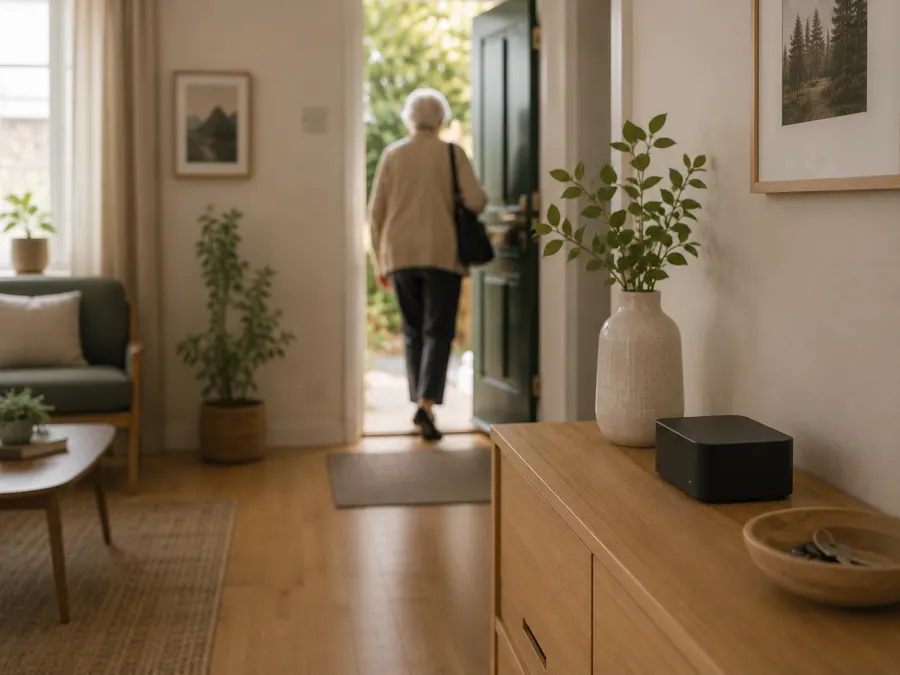
Spåna closes that gap without turning anyone's home into a surveillance site. There are no cameras and no microphones. What it watches is far simpler: the ordinary rhythm of a household as told by the motion and door sensors already paired to an IKEA DIRIGERA hub. Someone gets up. Someone goes to the kitchen. The front door opens around the usual time. None of that is interesting on its own – it becomes interesting the day it doesn't happen.
That's the whole idea. Rather than streaming a feed you'd have to watch, Spåna stays quiet until a pattern breaks. If there's no movement in the house by the time the morning is usually well underway, you hear about it. If the house goes still for hours in the middle of the day, you hear about it. The rest of the time you hear nothing, which is exactly what you want from something like this.
It also matters that this is not a medical device and doesn't pretend to be. Spåna won't detect a fall, call an ambulance, or tell you how someone is feeling. What it gives you is a timely nudge to pick up the phone – early enough that the call is useful, and grounded in something more concrete than a vague feeling that you haven't heard from them in a while.
The privacy story is worth being explicit about, because it's usually the sticking point when you raise this with the person you'd be monitoring. Hub credentials never leave their network. There is no camera anywhere in the setup. And the thing being shared is not a picture of their life – it's a handful of yes/no signals about whether the house has been moved through today. That's a much easier conversation to have, and it's a conversation worth having rather than installing something quietly.
Alerts worth setting up
Each of these is a rule you configure once in Spåna against a room. Tune the durations and thresholds until the alerts you get are ones you act on.
- No movement
- Set a duration that suits the household – three hours during the day is a common starting point. If nothing has triggered the motion sensors in that window, you get an alert. Set a longer one overnight or lean on quiet hours instead.
- Movement during quiet hours
- Define the hours the house is normally asleep. Motion during that window – repeated trips to the bathroom, or someone up and wandering at 3am – surfaces as an alert rather than disappearing into an event log nobody reads.
- Someone arrives
- Fires the first time motion is picked up in a room or area. Put it on the kitchen or hallway and it becomes the "the day has started as usual" signal – arguably the most reassuring alert of the set.
- Door or window opens
- On the front door, this tells you when they have gone out and come back. Useful context on its own, and it explains an otherwise alarming stretch of no movement.
What this setup needs
Spåna watches sensors that are already paired to your DIRIGERA hub, so most of this is placement rather than shopping.
- A motion sensor in the two or three rooms that get used every day – typically the hallway, kitchen and living room. You do not need one in every room, and bedrooms are usually best left out.
- An open/close sensor on the front door, so trips out of the house register as trips out rather than as an unexplained quiet spell.
- An IKEA DIRIGERA hub with those sensors already added and named in the IKEA Home smart app. Spåna reads what is there – it does not replace that app.
- An always-on device on their network – a Raspberry Pi, mini PC or NAS – to run the Spåna agent. It talks to the hub locally and keeps one outbound connection open.
Questions
- Can Spåna tell me if an elderly parent living alone is up and about?
- Yes. With a motion sensor in the key rooms, Spåna learns the ordinary rhythm of the home and can alert you if there is no expected morning movement, or after a long stretch of inactivity during the day.
- Does this need cameras in my parent's home?
- No. Spåna works only from motion, door/window and temperature sensors. There is no camera and no microphone anywhere in the setup, which makes it a far easier thing to agree to.
- Will Spåna detect a fall?
- No. Spåna is not a medical alert device and cannot detect a fall or call for help. What it can do is flag a long stretch of unexpected inactivity, so you know to check in sooner than you otherwise would.
- Can more than one family member get the alerts?
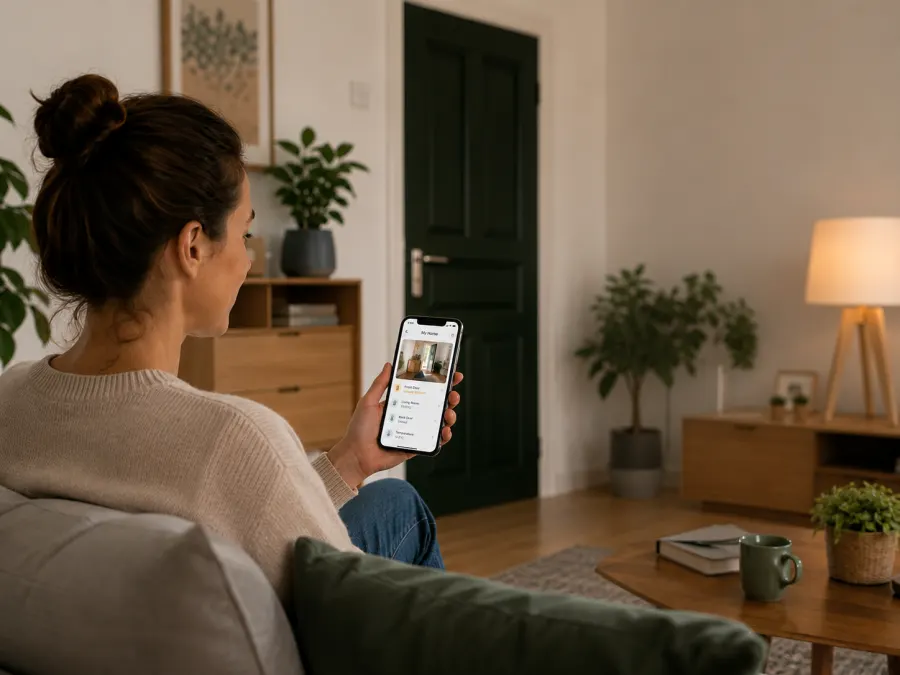
- Yes. Alerts go to the Spåna apps on iOS and Android, so siblings sharing the check-ins can each get the same notification rather than relying on one person to pass it on.
Built on the sensors you already have
Every alert on this page runs on standard IKEA DIRIGERA sensors – motion, door/window and temperature. Group them into rooms, set your own alerts, and Spåna does the watching.